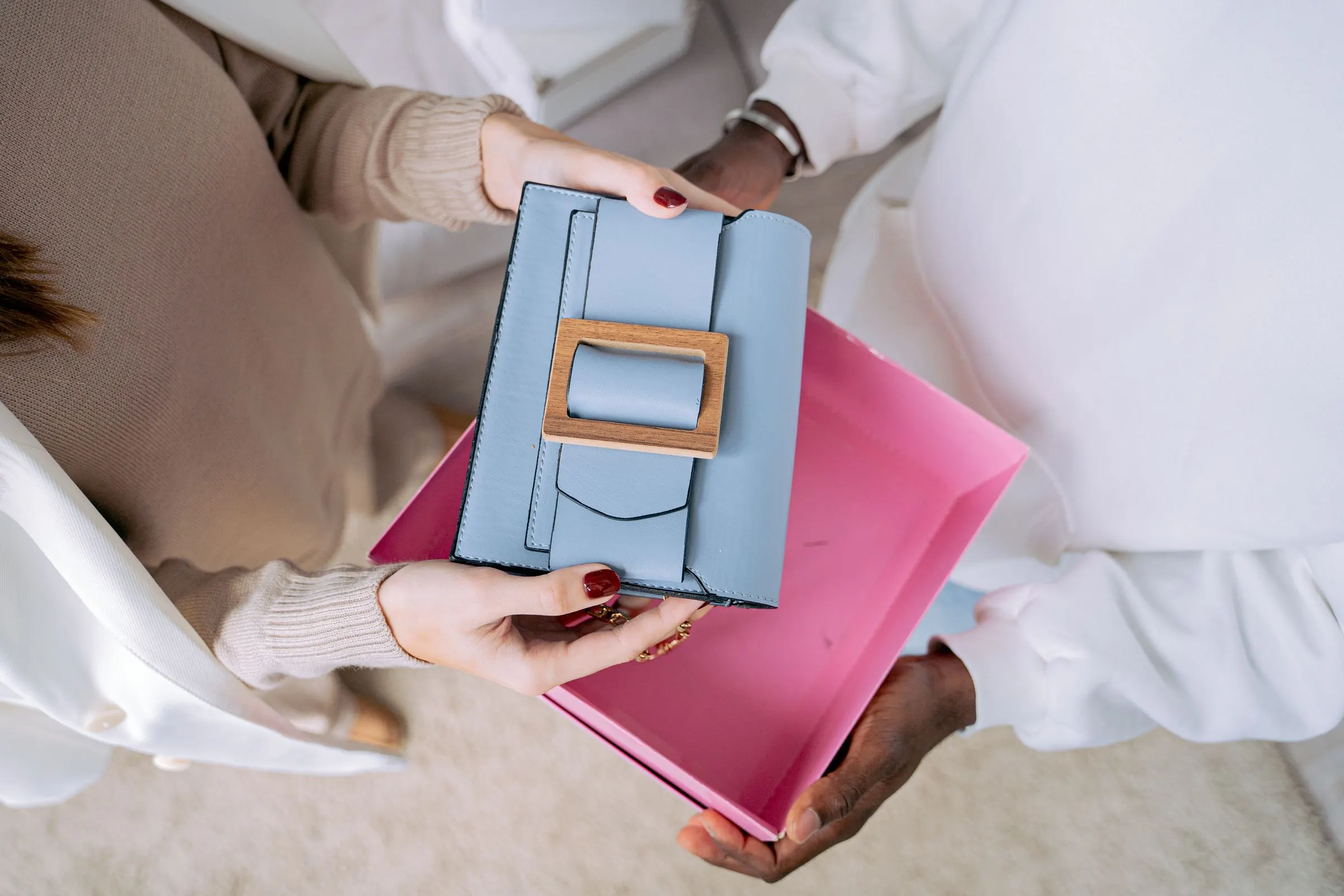
The Anatomy of a Luxury Gift Basket, Layer by Layer
A composed gift is architecture before it is abundance. Here is how a bespoke basket is built, layer by layer, in the studio.
By Lana Sverdlik · BonVivant Gift Wrapping

People assume a gift basket is an act of accumulation — find beautiful things, arrange them attractively, add ribbon. The good ones are built the other way around. They begin with structure and an argument, and everything visible is the last decision rather than the first.
The Vessel Sets the Register
Before anything goes in, we choose what it goes into, because the vessel decides the tone of the entire gift. A lacquered box reads formal and urban. A woven tray with a low lip reads generous and domestic. A hat box reads celebratory and slightly theatrical. A footed bowl reads like a wedding. Clients often arrive asking for a basket and leave with something that is not a basket at all, because the occasion called for a different register. The vessel is also the part of the gift that survives longest, so it should be worth keeping.
Size is the harder decision. A vessel that is too large forces filler, and filler is the single most reliable way to make an expensive gift look inexpensive. A vessel that is too small forces a compromise on the hero object. We size to the contents rather than the budget, which occasionally means telling a client that the gift they described wants a smaller, better container. The goal is a gift that looks composed from every angle, including the one nobody plans for — the view from above, on a counter.
The Base: Structure You Never See
Under every good composed gift is an internal architecture the recipient will never look at. Blocks, risers, cut forms, and tissue built into shapes create a stepped interior so that every item sits at its own height and faces forward. Without it, contents slump toward the center, the tallest object hides the rest, and the whole thing collapses into a pile during the first turn of a car. The base is the reason a gift photographed in the studio still looks like that when it reaches a front hall in Manhasset.
This is also where the craft lives. Building a base is patient work — measuring, trimming, testing the sightlines, taking a piece out because it fights the object beside it. Our studio benches are covered in half-built interiors that will be invisible within an hour. When people ask why a bespoke gift takes longer than a retail one, this is the answer. The visible layer can be assembled quickly. The layer that holds it steady for the length of a drive across the Long Island Expressway cannot.

The Hero Object
Every composed gift needs one thing that is unmistakably the point. It might be a candle in a vessel worth reusing, a single exceptional confection, a piece of glassware, a book, a jar of honey chosen for the label as much as the contents. The hero does two jobs. It gives the gift a subject, and it gives the eye somewhere to land. A basket with six equally weighted items has no subject, and the recipient experiences it as inventory rather than as a gift.
Choosing the hero is where we spend the most time with clients, because it is where the relationship between giver and recipient actually shows. A hero object that flatters the giver is a common misstep — the rare item chosen to demonstrate access rather than affection. The better instinct is to choose the thing the recipient would not buy for themselves but would use immediately. That is a narrower target than it sounds, and hitting it is the difference between a gift that is admired and a gift that is remembered.
“Filler is the single most reliable way to make an expensive gift look inexpensive.”
The Supporting Cast
Around the hero go three to five supporting pieces, and their job is to extend the idea rather than compete with it. If the hero is a coffee ritual, the support is what surrounds a morning — a small tin of something to eat standing up, a linen napkin, a chocolate that survives a warm kitchen. If the hero is a candle, the support is the rest of an evening. We test each addition against one question: does this deepen the story, or does it only fill space. The second answer means it comes out.
Color and texture do quiet work here. A composed gift built entirely in cream is elegant and slightly inert. One texture contrast — matte against gloss, woven against lacquer, paper against glass — wakes the whole arrangement up. We also plan for what happens when the gift is unpacked, because a recipient removes items in a sequence and that sequence is designable. The best composed gifts reveal something new at the second and third layer rather than giving away their entire argument at first glance.
Florals, Ribbon, and the Card
Florals are the last structural element and the most demanding one. Through our sister studio, BonVivant Florists, we work fresh stems into a composed gift only when someone will be there to receive it, and we design so the flowers read as part of the architecture rather than as a bouquet resting on top. Sometimes the right answer is a single bloom tucked at the shoulder of the vessel. Sometimes it is dried material that will hold for months. The wrong answer is always a spray of flowers doing apologetic work over an underbuilt interior.
Then the ribbon, which is the last thing we touch and the first thing the recipient sees. We choose ribbon for body and hand rather than for pattern, because a ribbon with structure holds its shape through delivery and a limp one announces itself immediately. The card goes on last, written rather than printed, positioned where a hand naturally reaches. A composed gift that arrives with a beautiful interior and a careless card has undermined an hour of work in the final thirty seconds of it.
The seven layers of a composed gift
- 01Vessel chosen for tone, not for volume
- 02Internal base built to hold every angle
- 03One hero object that gives the gift a subject
- 04Three to five supporting pieces that extend the story
- 05A single texture contrast to wake the palette
- 06Ribbon with body, and a card written by hand
Questions we hear
Fewer than most people expect. One hero object and three to five supporting pieces is a proportion that reads as generous without tipping into inventory. Beyond that, items start competing for attention and the gift loses its subject. If a vessel looks empty at that count, the vessel is too large — we size down rather than adding filler to justify it.