Wrapping a Designer Handbag: A Study in Discretion
When a client brings in a designer handbag they bought elsewhere, the wrapping has to be equal to the object. Here is how that work is done.
By Lana Sverdlik · BonVivant Gift Wrapping
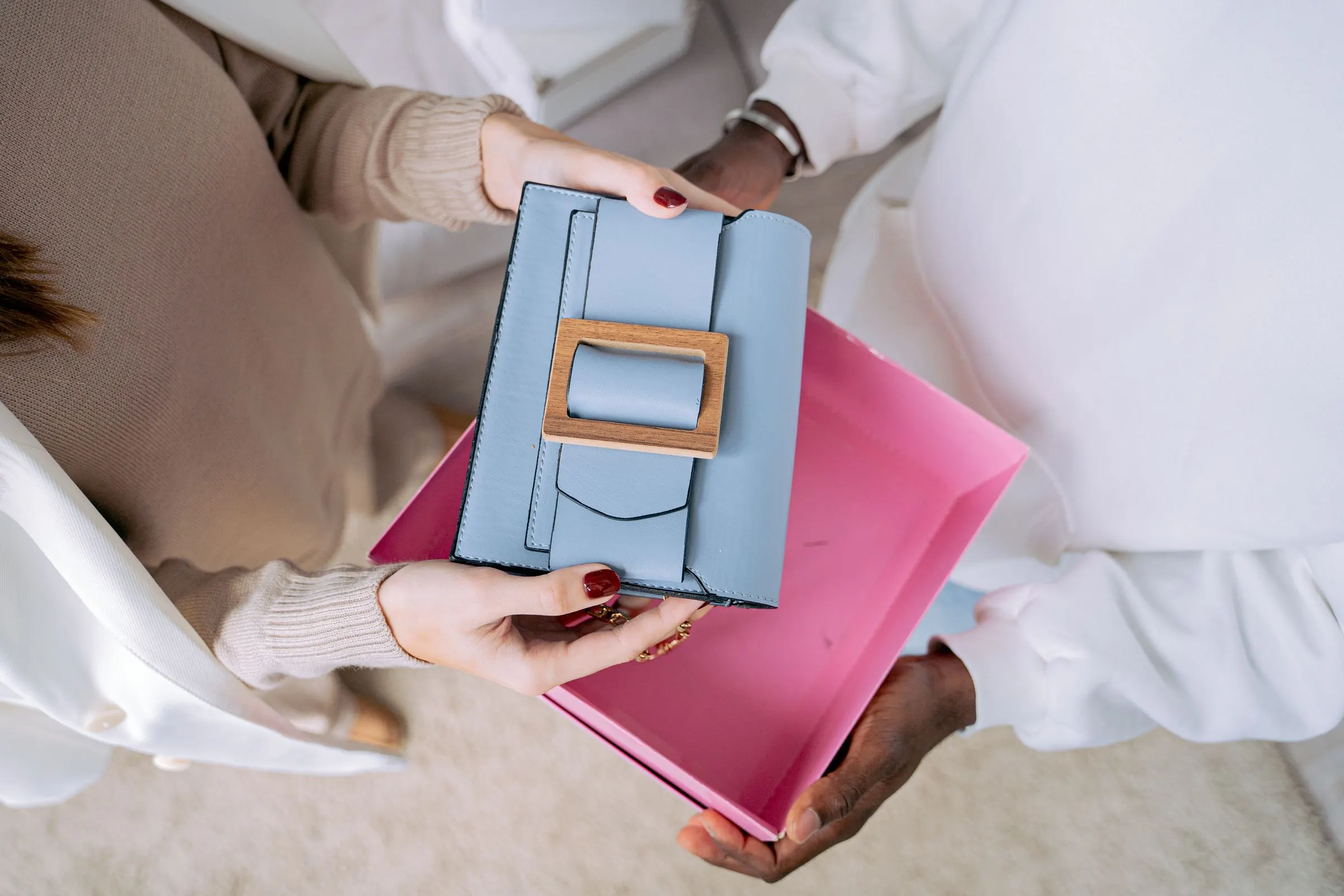
Several times a month someone arrives at the studio holding a shopping bag they would rather not put down. Inside is a designer handbag, a watch, a pair of shoes — something bought elsewhere, at some cost, for someone specific. What they want from us is presentation equal to the object.
Why Clients Bring Us Their Own Luxury Items
Retail packaging is designed for the store, not for the moment of giving. It is built to survive a stockroom and to advertise a house, and it is generally excellent at both. What it is not built for is the specific theater of handing something to a person you love. Customer-owned luxury items arrive at our studio in perfectly good boxes, and clients ask us to rebuild the presentation because they want the reveal to belong to them rather than to a brand.
There is also a practical reason. A gift bought in one season and given in another has usually been stored, and storage is unkind to structure. Corners soften, tissue flattens, ribbon creases. Rebuilding the presentation restores the crispness that makes an expensive object look expensive. We see this most before engagements, anniversaries, and the winter holidays, when clients buy early, store carefully, and then want the object to look the way it looked on the day they chose it.
Tissue, and the Architecture Beneath It
Tissue is not padding. Used properly it is the internal architecture that holds a bag’s shape through storage, transport, and the moments before opening. A structured handbag wants its interior filled to its own silhouette, softly and completely, so the base stays square and the handles hold their line. A slouchier bag wants less, because over-filling a soft bag distorts the very quality that makes it desirable. Reading the object correctly before the first sheet goes in is most of the job.
Around the object, tissue does a second job entirely — it creates the pause. The best reveals are staged rather than immediate: an outer box, a fold that opens rather than tears, a layer of tissue sealed with a small mark, and only then the object. Each layer buys a second of anticipation. We think about how many layers a particular moment can support, because a gift opened across a dinner table wants a shorter reveal than one opened alone on a morning in a quiet room.
Boxes, Dust Bags, and What Stays With the Gift
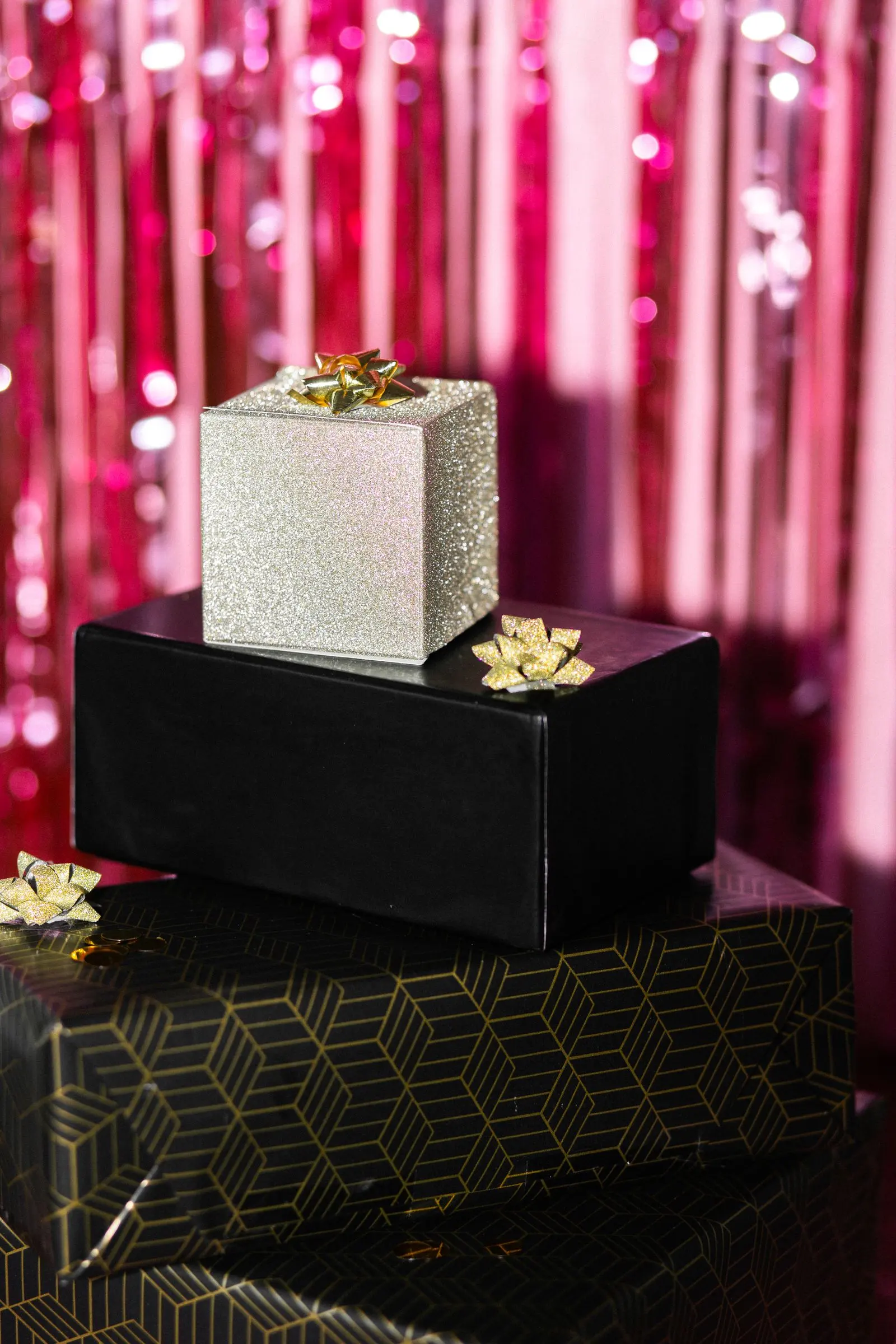
A dust bag is part of the object’s long life and it should always stay with the gift, even when it does not appear in the reveal. Our usual approach is to present the bag itself in tissue and to place the folded dust bag beneath it in the box, so the recipient finds it as a second discovery rather than as an obstacle between them and the thing they are opening. The same logic applies to authenticity cards, care instructions, and original boxes the client wants preserved.
Clients sometimes ask us to discard the original packaging, and we always ask twice before doing it. Boxes and dust bags carry real value if the item is ever resold, stored long term, or passed down, and a decision made quickly on a Tuesday afternoon can be regretted years later. When a client does want the original box gone from the presentation, we keep it aside and return it separately, so the reveal is clean without the material being lost.
“Retail packaging is built to advertise a house. The gift you are giving should belong to you.”
Ribbon, Proportion, and the Reveal
Proportion governs everything at this scale. A large box takes a wide ribbon, and a narrow ribbon on a substantial box reads as an economy the object contradicts. But width is only half of it. A ribbon needs enough body to hold a shape under its own weight, which is why we choose by hand and texture rather than by color first. A beautiful color in a weak weave collapses within an hour, and the gift arrives looking tired before anyone has touched it.
Lana’s rule is simple: the ribbon is the last thing you touch and the first thing they see. With customer-owned luxury items we keep the exterior deliberately quiet — a single color, one material, no competing ornament — because the object inside is doing the talking. Restraint at the outer layer also protects the surprise. A gift that telegraphs its contents from across the room has spent its best moment before the recipient has put their hands on it.
Discretion as a Service
Handling other people’s significant purchases is a matter of trust, and the procedures are unglamorous. Items are logged in and out, kept in a dedicated area of the studio rather than on an open bench, and handled with clean hands and, where the material calls for it, gloves. Nothing is photographed for our own use without permission, which is why so much of this work never appears anywhere. The clients who use us for it are generally the ones you would never know were clients.
Discretion also means not asking. People buy significant gifts for a range of reasons and mark a range of occasions, and it is not our role to inquire further than the design requires. What we need to know is the object, the moment, and who is opening it. Everything else belongs to the client. That boundary is part of the service, and in a small community like ours it is the reason the same families return with the next occasion in hand.
Bringing us an item to wrap
- 01Bring the original box and dust bag, even if unused
- 02Tell us where and how the gift will be opened
- 03Say whether the reveal should be quick or staged
- 04Flag anything fragile, unlined, or newly conditioned
- 05Decide whether original packaging is kept or returned
- 06Allow time if the item has been in storage
Questions we hear
Yes, and many of our clients do. Customer-owned luxury items are logged, handled in a dedicated area of the studio, and rebuilt into a presentation designed for the moment you are giving it rather than for a retail shelf. Bring the original box and dust bag if you still have them, even if you would prefer they not appear in the final presentation.