The Art of the Enclosure Card: What to Actually Write
The card is the only part of a gift written in your own hand. A practical guide to what to say for weddings, sympathy, new babies, and clients.
By Lana Sverdlik · BonVivant Gift Wrapping

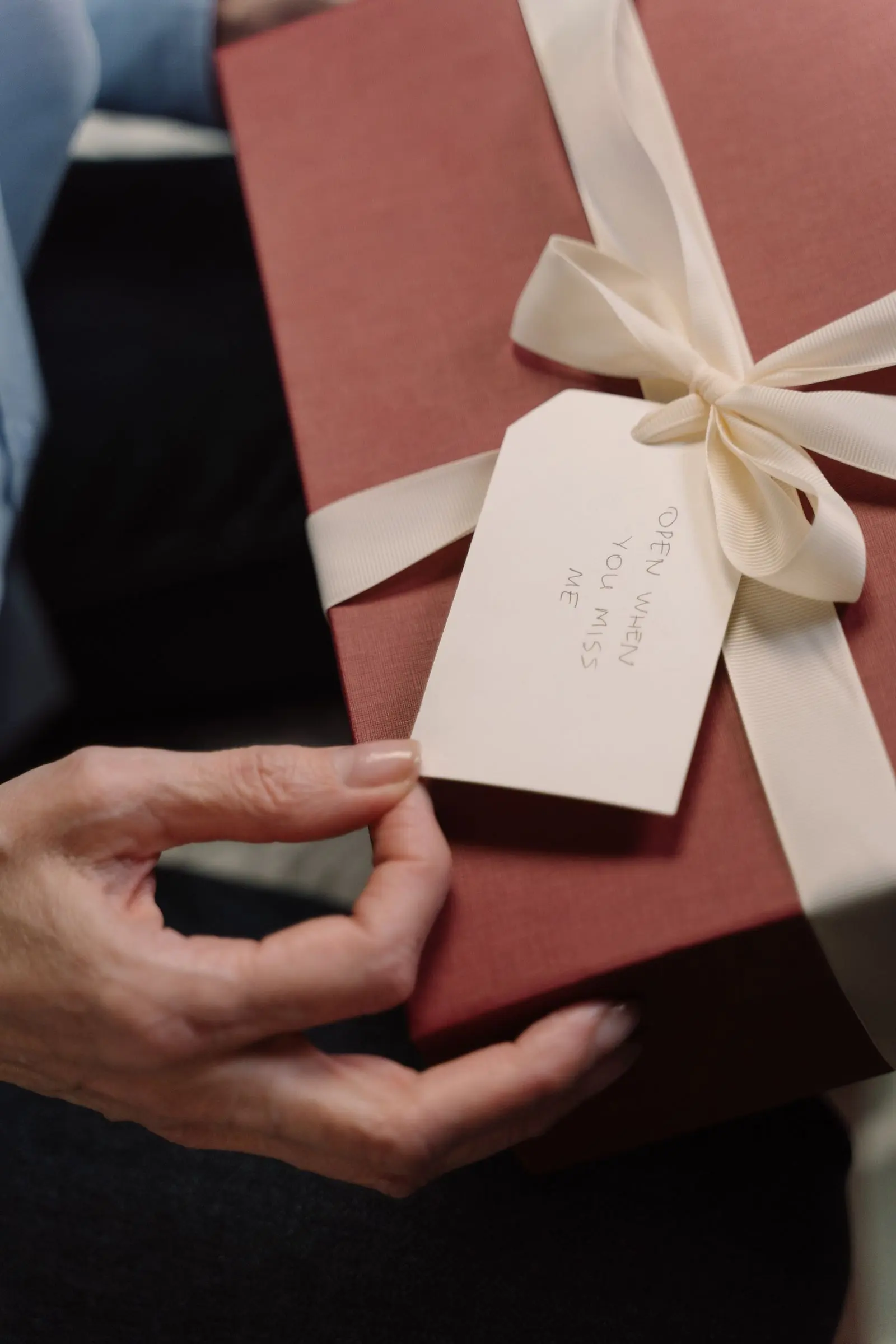
Of everything that goes into a gift, the card is the only element the giver makes themselves. It is also the part most people leave until they are standing at the counter with a pen. A little preparation changes what the whole gift communicates.
Why the Card Is Not an Afterthought
A card does something no object can. It fixes the gift to a moment and a relationship, and it is usually the piece that gets kept. People throw away the box and remember the sentence. We have clients who still have cards from a wedding fifteen years ago tucked into a book, and not one of them remembers what was in the accompanying box. Writing three careful lines is the highest-return work in the entire exercise of giving something to someone.
The mechanics matter more than people expect. Write by hand, even if your handwriting embarrasses you, because the imperfection is the proof. Use the recipient’s name at the top and your own at the bottom, in full, if there is any chance of ambiguity. Keep it short — an enclosure card is not a letter, and the constraint of a small card is a gift to anyone who struggles with what to say. Three sentences is a complete thought and an appropriate length.
Weddings and Engagements
Wedding cards fail in two directions. They are either generic, which wastes the moment, or they are advisory, which nobody asked for. The reliable structure is to name something specific you have observed about the two of them, then offer a wish rather than a lesson. Avoid the joke about the honeymoon, avoid the reference to your own marriage, and avoid anything that requires the couple to remember a story in order to understand the card.
A few that work. For a couple you know well: “Watching the two of you build this has been one of the great pleasures of the last few years. Every happiness in the home you are starting.” For a couple you know less well: “With warmest wishes on your wedding day, and for everything that comes after it.” For an engagement: “Delighted for you both. Enjoy this part — it only happens once, and it goes quickly.” Sign with your full name if the couple will be writing thank-you notes.

Sympathy and Shiva
Sympathy is where people freeze, and the freezing usually produces silence, which is worse than an imperfect card. The rules are simple. Do not explain the loss, do not look for a silver lining, and do not tell the bereaved how they should feel or what stage they are in. Name the person who died, say something true about them if you knew them, and make a concrete offer if you intend to follow through on it. Brevity is not coldness here — it is restraint.
For a gift sent to a shiva house, the gift itself is the message and the card should be quiet. Food that feeds a household is the tradition, and the presentation should carry no balloons, no bright ribbon, no celebratory note. A card might read simply: “Thinking of you and your family. Sending something for the house so nobody has to think about dinner.” Or: “There are no right words. We are so sorry, and we are close by if you need anything at all.”
“People throw away the box and remember the sentence. Write the sentence.”
New Babies, Housewarmings, and Thank-Yous
A new baby card should be addressed to the parents, not to the infant, who is not reading it. Acknowledge the person who just did something physically enormous. “Congratulations to you both. Be gentle with yourselves this month — we are thrilled for you.” If you are sending to a second or third child, mention the siblings, because a family that has been through this before appreciates being seen as a family rather than as a delivery. Keep any advice you are carrying entirely to yourself.
Housewarming cards should reference the house. “To the first of many dinners in this kitchen” does more work than a generic good wish, because it puts a picture in the recipient’s head. Thank-you notes should name the specific thing you are thanking someone for, always. “Thank you for the beautiful bowl” is fine. “Thank you for the bowl — it has been on the table every night since it arrived” is the note people keep. Specificity is the entire technique.
Corporate Notes That Sound Like a Person
A business card should be written by a person and signed by a person. The single most common failure is the printed signature, which announces that nobody involved spent thirty seconds on this. If the list is long, divide it among the team so every card is genuinely handwritten. A shorter list of real notes will always outperform a longer list of produced ones, and recipients can tell the difference instantly, even if they never say so.
Reference something real. “Thank you for a good year — the spring project was the most interesting work we did” lands where “We value your partnership” does not. For closings: “Congratulations on the house. Wishing you a wonderful first winter in it.” For holiday programs, avoid assuming the recipient’s observance; a note about the year rather than the holiday reads warmly to everyone. Keep the firm’s branding on the wrapping and let the card be a voice.
Writing an enclosure card
- 01Write it by hand, before the day of the event
- 02Open with their name, close with your full name
- 03Name one specific thing, not a general sentiment
- 04Offer a wish, never advice
- 05For sympathy, say the person’s name and keep it short
- 06For business, never use a printed signature
Questions we hear
Three sentences is a complete thought and suits the format. An enclosure card is not a letter, and the small size is genuinely helpful for anyone who freezes at a blank page. If you find yourself needing more room, the occasion probably calls for a separate note on proper stationery, with a short card accompanying the gift itself.